Research · AI · Product
Founding researchDesigning AI for an Art Market That Didn't Exist Yet.
- Role
- Product & research lead
- Team
- Founders, ML researchers, engineering
- Timeline
- 2019
- Platform
- Web · ML platform. Survey Tool.
Foundational research for an AI startup serving artists, galleries, and collectors, and the survey that proved the real market was nobody the industry was building for. We sought out to gauge what the appetite to pay for AI art was.
Artrendex builds AI for the art market, Playform for generative art, ArtPI for visual analytics, and AVAI for AI-based authentication. I led the founding product research, including a survey and qualitative research to capture art buyers and non-buyers mental models to understand art buyers appetite for buying A.I art, and in what context it would be best applicable for their lives.
This research reframed who the platform should serve and how to price, distribute, and explain the product and its application.
The three AI platforms
01 to 03
Research shaped three product lines under the Artrendex umbrella. Each is detailed step by step further down the page.
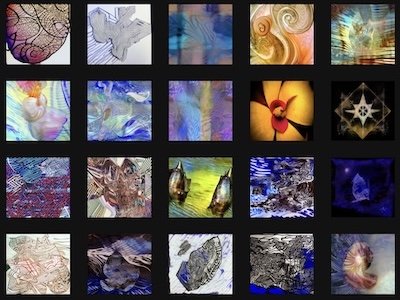
Playform
One of the first generative AI platforms built for working artists, deployed in 2019. Onboarding, tone, and pricing grounded in what the wider creator market actually wanted from AI tools.
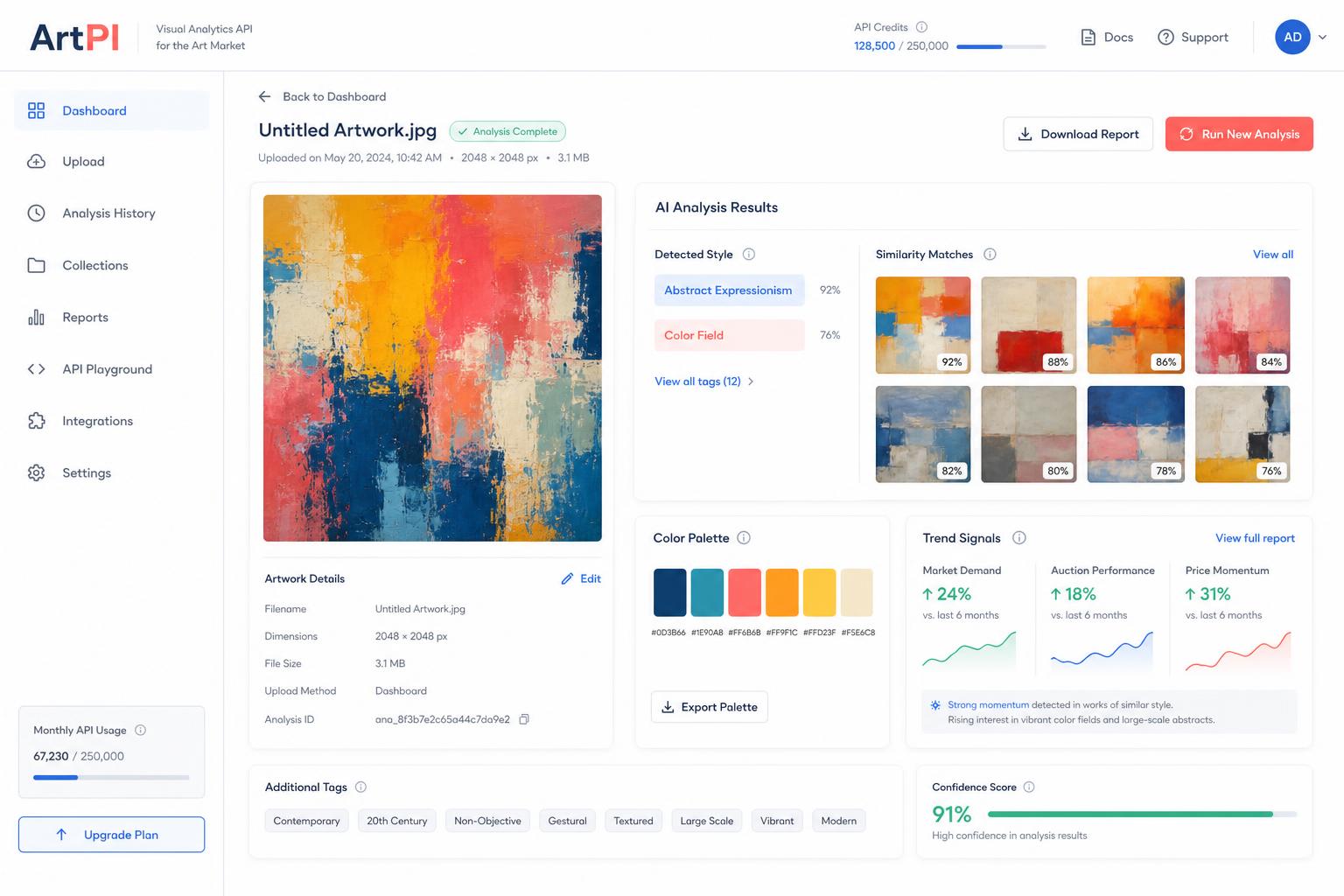
ArtPI
An API for galleries, marketplaces, and platforms to read artwork the way the research read the buyer: style, similarity, and trend signal in one call.
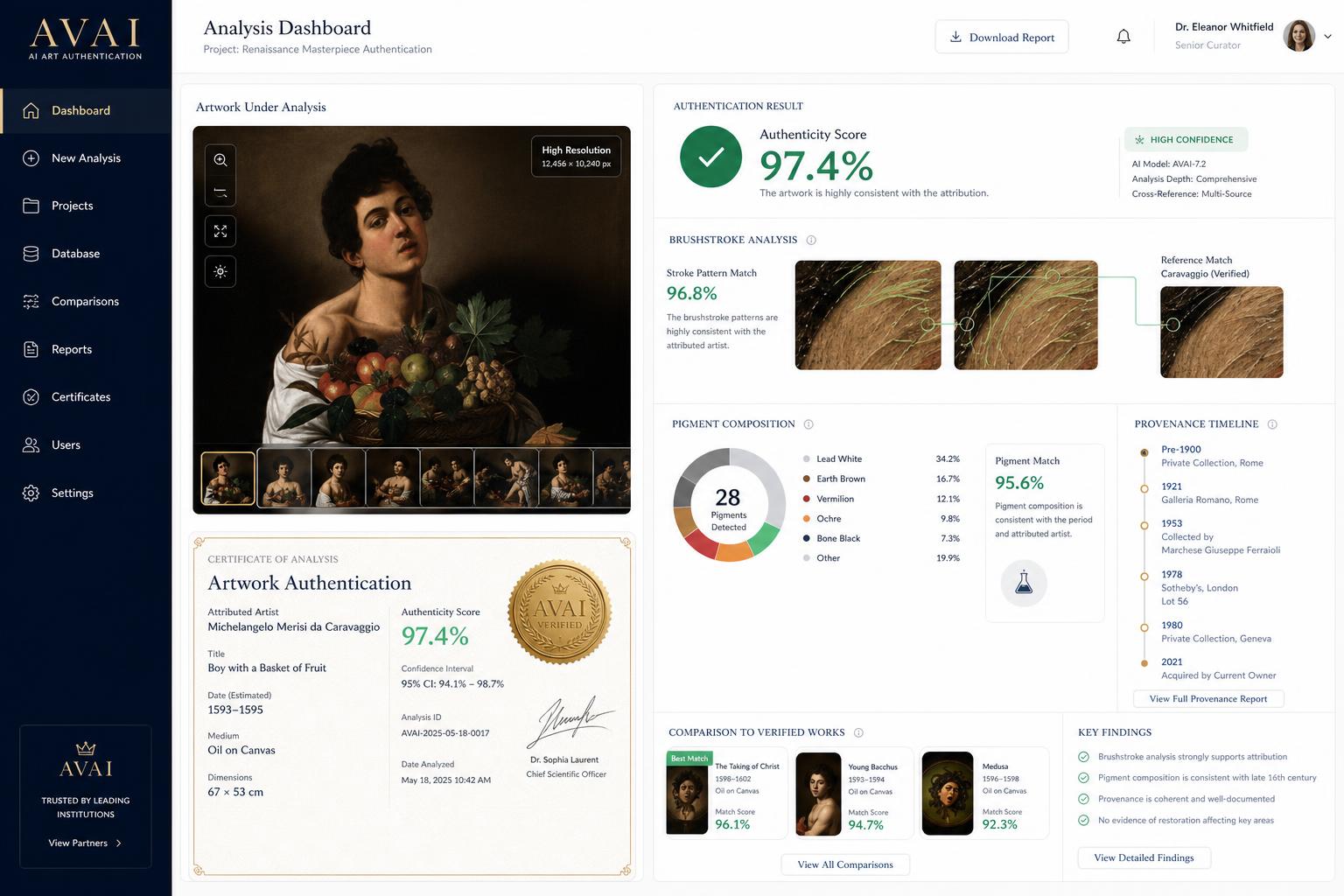
AVAI
Patented technology authenticating works from high-resolution images, targeted at galleries and institutions where dollar density justifies the cost.
The art market is worth $64 billion, but most of that volume sits with a tiny number of fine-art collectors. Artrendex needed to know whether its AI tools, trend analytics, generative art, and authentication, should chase that elite market or design for a much larger mainstream audience nobody had mapped.
The team was making product, pricing, and go-to-market bets without primary data on real buyers. The problem: no one had actually checked who buys art.
The company was running under an assumption that the answer is "collectors," and was about to build its entire roadmap on that assumption without testing it. If it was wrong, every product and pricing decision built on top of it would be wrong too.
Research & discovery
A two-arm survey targeting both art buyers and non-buyers was designed to test the assumptions the art market runs on. The headline finding: the mainstream buyer behaves nothing like the "fine art" buyer the industry is built around. There is more opportunity in the average print than in the fine art world. Unless, it is highly differentiated and tells a story.
The mainstream buyer behaves nothing like the fine-art collector
Most buyers spend a few hundred dollars per piece, buy roughly one piece a year, and treat art as decoration first, expression second. Investment was a primary motive for only 9%, a number that quietly invalidates most fine-art tooling for this audience.
Direct, online, and fairs lead, galleries are fifth
41% bought direct from the artist, 37% online, 35% at art fairs. Only 29% bought from a gallery. The fine-art market reports online at ~15%, the mainstream market is more than twice as digital as the industry assumes.
There is a 3× aspirational gap
Buyers said they'd spend roughly three times more on a piece they truly loved than on what they actually bought. The gap is the wedge, the right recommendation, framed the right way, moves a $500 buyer to a $2,000 buyer.
What the data actually said about how people buy art.
We commissioned a two-arm survey — art buyers and non-buyers — to test the assumptions the art market runs on. The headline finding: the mainstream buyer behaves nothing like the "fine art" buyer the industry is built around.
57%
Bought in the last year
of self-identified art buyers
3×
Aspirational gap
willing-to-spend vs actual spend
41%
Bought direct from artist
online (37%) and art fairs (35%) close behind
16%
Would subscribe
to art delivered to their home
Medium · interest
Which mediums would you buy?
- Painting or drawing80%
- Photography or prints65%
- Functional pieces45%
- Sculpture35%
- New media22%
- Installation12%
Channel · last 3 years
Where people actually buy art.
- Direct from artist41%
- Online37%
- Art fair35%
- Furniture / interior30%
- Galleries29%
- Art dealer18%
- Estate / second-hand17%
Price · per piece
Spend, actual vs aspirational.
Motivation
Why people buy what they buy.
75%
Decoration & visual appeal drive the purchase
9%
Bought as an investment or to re-sell
Takeaway · Buyers trust their own taste. They aren't waiting for an expert — they're waiting for a recommendation they believe.
The reframe
The mass-market art buyer isn't an under-educated collector. They're a confident decorator with a $500–$2,000 ceiling, shopping peer-to-peer and online — and the existing market has nothing designed for them.
Survey design
The intercept script behind the numbers. Two arms, fifteen core questions, screened on household income and recruited on the floor at SCOPE. Below is a snapshot of the working document, the full survey is linked for the curious.
The solution
The research became the spine of Artrendex's product strategy. It informed which segments each product spoke to, how the platform was priced and packaged, and the visual and editorial system used across the company's three products.
Flow 01
Playform, generative AI for artists
One of the first generative-AI platforms built for working artists, deployed in 2019. Research grounded the onboarding, tone, and pricing in what the wider buyer and creator market actually wanted from AI tools, not what the AI industry assumed they wanted.
Flow 02
ArtPI, visual analytics for the art market
An API for galleries, marketplaces, and platforms to read images of artwork the way Artrendex's research read the buyer, style, similarity, and trend signal, so recommendations could close the 3× aspirational gap surfaced in the data.
Flow 03
AVAI, authentication through visual AI
Patented technology authenticating works from high-resolution images. Targeted at galleries and institutions where the survey showed the dollar density and trust requirements that justify the cost of authentication.
Outcome & impact
The measurable results and what changed for people.
Survey findings shaped product scope and positioning across Artrendex's three product lines. Some numbers are public; others stay confidential.
- Replaced a year of internal debate with a shared, defensible picture of who the platform should serve. Still cited internally as the reason the company went broad on generative tools.
- Found several product applications for AI usage including household delivery and trade of art, medium range art purchases and editing tools in the industry.
Next project
Bringing coherence to enterprise HR tools that run payroll, scheduling, and multi-million-dollar pipelines.