Consulting · Service Design
NDA · Fortune 500 client workHuge — Fortune 500 & IMPACT Sprints
Three years at Huge designing for Fortune 500 clients (Google, UPS, Medicaid) and leading IMPACT sprints with mission-driven partners including the FBI and the Carter Center.
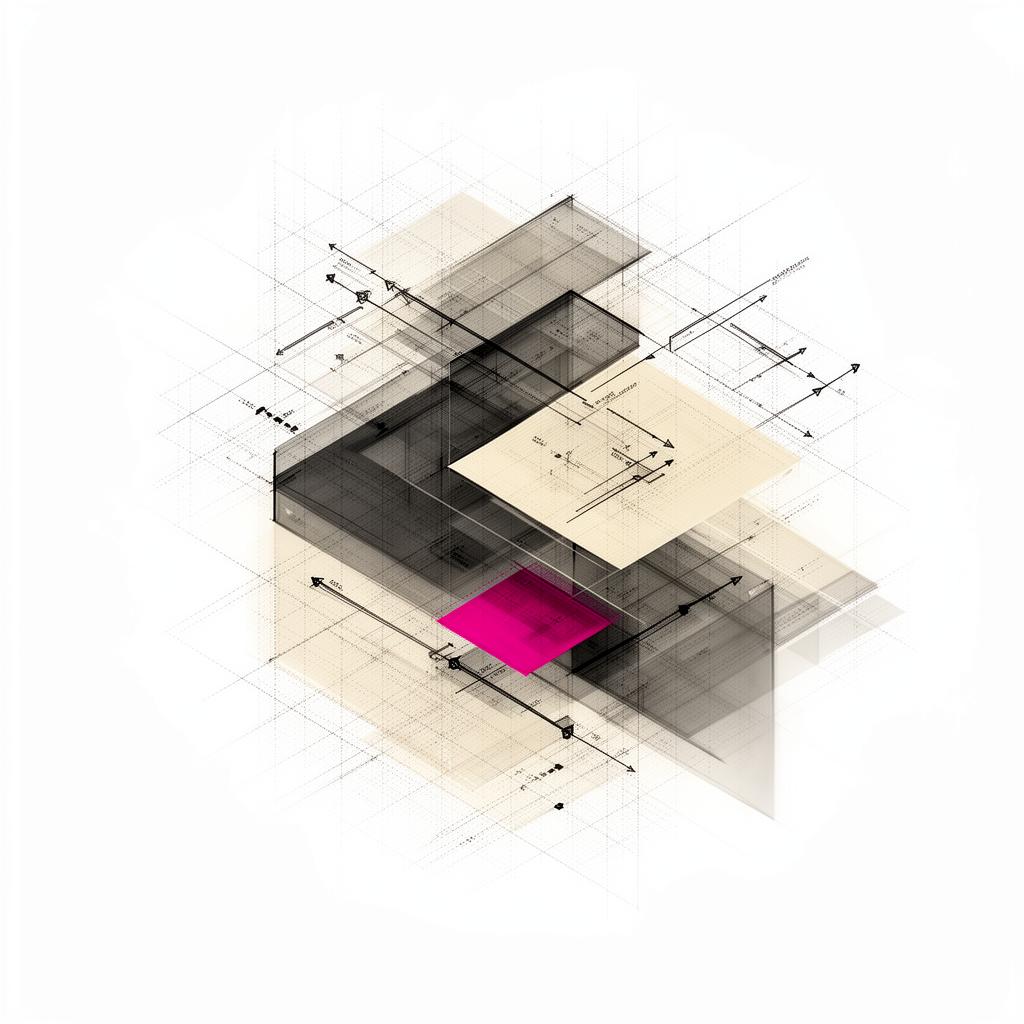
Representative — anonymized wireframes and process artifacts for confidentiality.
- Role
- Senior Designer · Sprint Lead
- Team
- Pods of 4–8: Design, Research, Strategy, Eng
- Timeline
- 2019 — 2022
- Platform
- Web · Mobile · Service
02 — Overview
TL;DR
I worked across two halves of Huge: large-account engagements (Google, UPS, Medicaid) where the artifact is a system, and IMPACT sprints (FBI, Carter Center) where the artifact is a clear path through a hard problem in four weeks. Both lean on the same craft — research, synthesis, prototypes that survive contact with users.
03 — Challenge
The challenge
Fortune 500 engagements are slow, political, and high-stakes — the design problem is usually entangled with org structure. IMPACT sprints are the opposite: four weeks, a single hard question, a partner that needs a defensible answer. Both demand the same discipline — strip the problem to its shape, prototype the riskiest assumption, test with real users before opinions harden.
04 — Research
Research & discovery
Across both tracks I leaned on a consistent research spine: stakeholder mapping, contextual inquiry, anonymized journey mapping, and rapid usability testing. Specifics are NDA; the shape of the work is what matters here.
- 01
Enterprise problems hide inside org charts
On the Fortune 500 side, the visible UX problem was usually a symptom — the upstream cause was a team boundary or a metric mismatch. Surfacing that early changed what we shipped.
- 02
Mission-driven partners need defensibility, not novelty
On IMPACT sprints, the partner has to defend the work to a board, a director, or the public. The deliverable that lands is the one with a clean evidence trail, not the flashiest concept.
- 03
Usability testing is the cheapest political tool we had
Ten sessions with real users ended more internal debates than any deck. The diagramed testing approach became a standing artifact teams reused across engagements.
05 — Process
Process & decisions
Process is what I can show. The artifacts here are anonymized — the shape of the work, the diagrams, and the testing approach — without exposing client-confidential surfaces.
Anonymized wireframes as the shared artifact
Every critical flow redrawn in neutral notation, with generic data. Same job as on Infor — let cross-functional teams argue about the system instead of about their own screens.
A repeatable usability-testing approach, diagrammed
Five sessions, two rounds, scripted prompts, a fixed scoring rubric. Diagrammed so any pod could run it without me, and so clients could see the rigor before the readout.
IMPACT sprint structure — four weeks, one question
Week 1 frame, week 2 prototype, week 3 test, week 4 hand-off. The structure was the deliverable as much as the work — partners adopted it for their own teams after the sprint ended.
Process artifacts that outlived the engagement
Journey maps, service blueprints, and decision logs designed to be picked up by a new team a year later without me explaining them. That's what made the work compound across clients.
06 — Solution
The solution
Client deliverables are NDA. The visuals below are representative — anonymized wireframes, process artifacts, and the usability-testing approach as a diagram. The IMPACT sprints with the FBI and the Carter Center have a public footprint and lead the visual weight; a private walkthrough of the real artifacts is behind a password.
Flow 01
IMPACT sprint — anonymized journey & prototype
The four-week structure walked through one sprint end-to-end: frame the question, map the journey, prototype the riskiest assumption, test with real users, hand off a defensible direction. Visuals redrawn for confidentiality; the structure matches what shipped to the partner.
Representative — anonymized wireframes and process artifacts for confidentiality.
Flow 02
Fortune 500 — anonymized wireframes
Representative wireframes from the Google / UPS / Medicaid track, redrawn in neutral notation with generic data. The information architecture and decision logic match the real work; the surfaces and copy do not.
Representative — anonymized wireframes and process artifacts for confidentiality.
Flow 03
Usability-testing approach — diagrammed
The standing testing rubric: five sessions, two rounds, scripted prompts, a fixed scoring sheet, a one-page readout template. Diagrammed so the approach is the artifact — the specific findings stay NDA.
Representative — anonymized wireframes and process artifacts for confidentiality.
A private walkthrough of the real artifacts — the IMPACT sprint outputs (FBI, Carter Center), anonymized Fortune 500 wireframes, and the usability-testing approach applied to live engagements. Ask me for the password.
07 — Impact
Outcome & impact
Agency engagements rarely surface clean public metrics — the outcomes were qualitative, adoption-shaped, and what the clients asked for.
The IMPACT sprint structure was adopted by mission-driven partners after hand-off — used by the FBI and the Carter Center on subsequent internal projects. On the Fortune 500 track, the anonymized wireframes and testing approach became the shared scoping language across pods. Repeat engagements with the same client teams were the strongest signal — and the reason the IMPACT track kept growing.
08 — Reflection
What I'd do differently
Agency work taught me that the artifact that survives the engagement matters more than the artifact that wins the readout. The IMPACT sprint structure is the clearest example — it kept working after I left the room. I'd push earlier to make every Fortune 500 deliverable as portable as the sprint outputs.
Next project
Likely Story